Code graphs
Map one change before you refactor
Use a short caller map and a test boundary to size a proposed change.
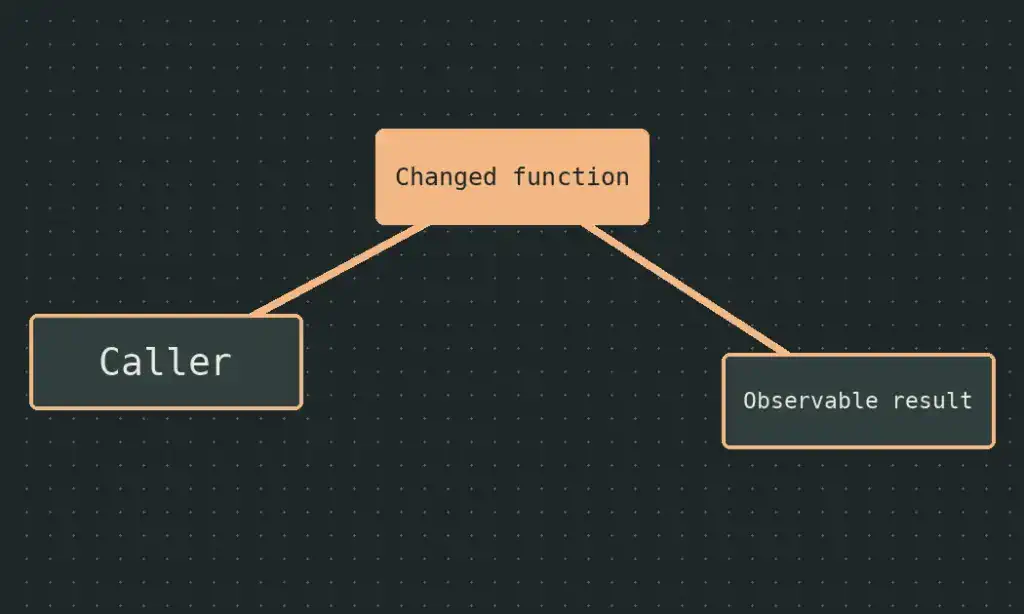
A proposed rename first looks like a line in a diff. The interesting question is what the new line can reach. A small caller map gives a reviewer a realistic starting point before a wide search fills the screen with guesses.
Start at a public entry point
Imagine a teaching repository with a command-line importer, a web checkout and a shared currency formatter. A developer wants to change the formatter’s rounding at halfway values. Put the public entry points on the same page as the direct callers. The command-line output is a file another tool reads; the checkout output is a price a person sees. Both depend on one function and exercise different parts of the contract.
Walk from each entry point far enough to identify a test that reads the consequence. For checkout the integration fixture should cover a boundary value. For export, compare what happens when a value has the exact precision the receiving tool expects. Give your teammate a revision and source location so they can check the two paths without reconstructing your search session.
If a plugin loads a formatter by a name from configuration, capture it as an edge that needs confirmation. The developer can inspect the configuration and a realistic invocation. Record confirmed and unresolved paths before proposing how wide the change should be.